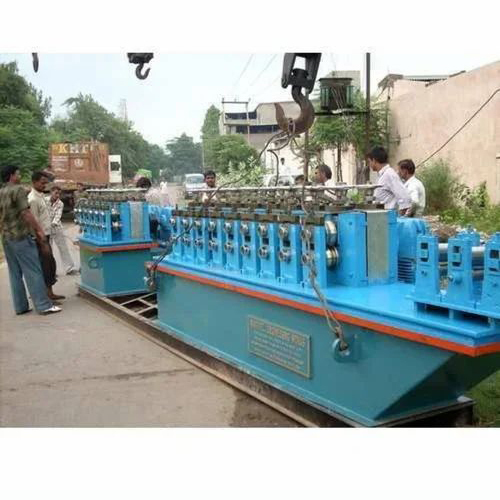
Japanese door / CHOKHAT section Profiling Machine About
| Capacity |
5 ton/day |
| Usage/Application |
Chokhats |
| Automation Grade |
Automatic |
| Material |
Mild Steel |
| Country of Origin |
Made in India |
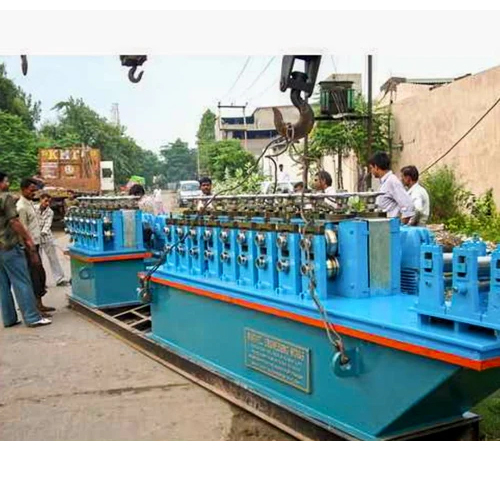
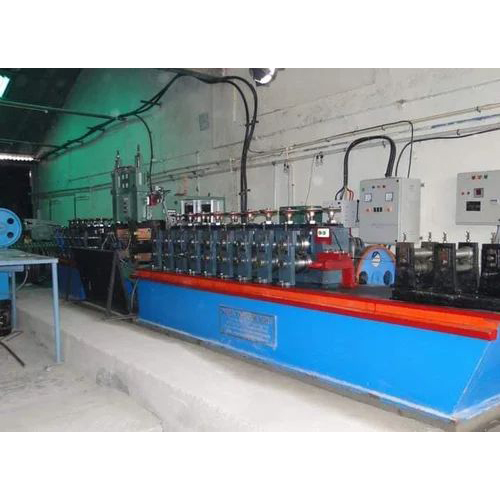
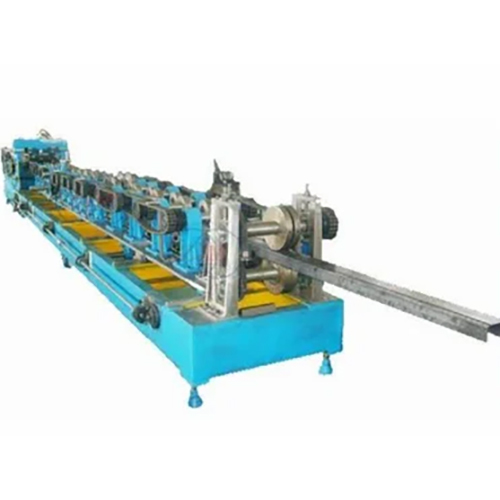
We are a leading Manufacturer of steel Door frame making machine.
Japani Chokhat making machine
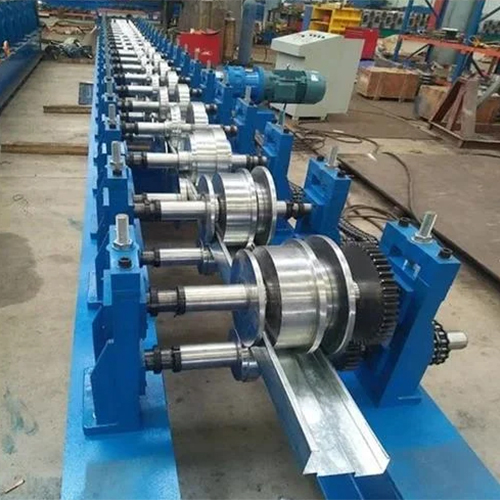
High-Grade Steel Profiling with PrecisionUtilizing high-quality chromium steel rollers and automated systems, this machine delivers accurate profiles for steel door and frame applications. Its PLC control ensures consistency for every production batch, catering to the rigorous standards of construction projects and manufacturers. The automatic lubrication and industrial air cooling systems enhance durability and maintain peak performance.
Efficient and Versatile ProductionDesigned for both large-scale manufacturing and bespoke fabrication, the JDSC-PF100 accommodates a wide material thickness range. Its quick changeover feature (20-30 minutes) and variable decoiler options (manual or hydraulic) make it adaptable for diverse profiling needs, minimizing downtime and maximizing throughput for all types of steel section production.
Comprehensive Safety and Easy OperationOperator safety is prioritized through features like emergency stops, overload protection, and protective guards. The intuitive interface enables efficient control by just 1-2 operators. Standard industrial connectivity and robust build quality ensure reliable operation, easy maintenance, and seamless integration into existing manufacturing workflows.
FAQ's of Japanese door / CHOKHAT section Profiling Machine:
Q: How does the Japanese Door/CHOKHAT Section Profiling Machine maintain high production accuracy?
A: The machine utilizes 18 precision-engineered chromium steel rollers and a PLC-controlled system, delivering profile accuracy within 1.0 mm. Automatic hydraulic cut-off and chain drive further enhance cutting precision and product consistency.
Q: What materials can be processed with this profiling machine?
A: The JDSC-PF100 is suitable for galvanized steel, mild steel, and stainless steel with thicknesses ranging from 0.8 mm to 2.5 mm, making it versatile for various steel section applications.
Q: When should I use the manual versus hydraulic decoiler option?
A: Choose the manual decoiler for small to medium production runs where flexibility is required. Opt for the hydraulic decoiler for larger, continuous operations needing quicker, more efficient material handling.
Q: Where is this machine commonly used?
A: This profiling machine is ideal for steel fabrication workshops, door and window manufacturing units, and construction material suppliers involved in producing Japanese door or CHOKHAT frames.
Q: What is the typical process for changing profiles on the machine?
A: Changing profiles involves halting production, switching out the profiling rollers or adjustment sets, and reconfiguring the PLC settings. The process typically takes 20 to 30 minutes, minimizing downtime.
Q: How many operators are needed to run this machine, and is special training required?
A: The machine is designed for easy operation by 1-2 persons. Basic training in safety procedures and operation of PLC-controlled systems is recommended for optimal performance.
Q: What are the key benefits of using this profiling machine in steel section fabrication?
A: Key benefits include high production capacity (10-15 meters/min), full automation, low maintenance, quick profile changeover, robust safety features, and consistent quality suitable for demanding applications in construction and interiors.





 Send Inquiry

 Send Inquiry
 Send Inquiry